Contact

Jacob Kirkegaard: Mellem Rum

Kunstmuseet i Tønder, Museum Sønderjylland

2021

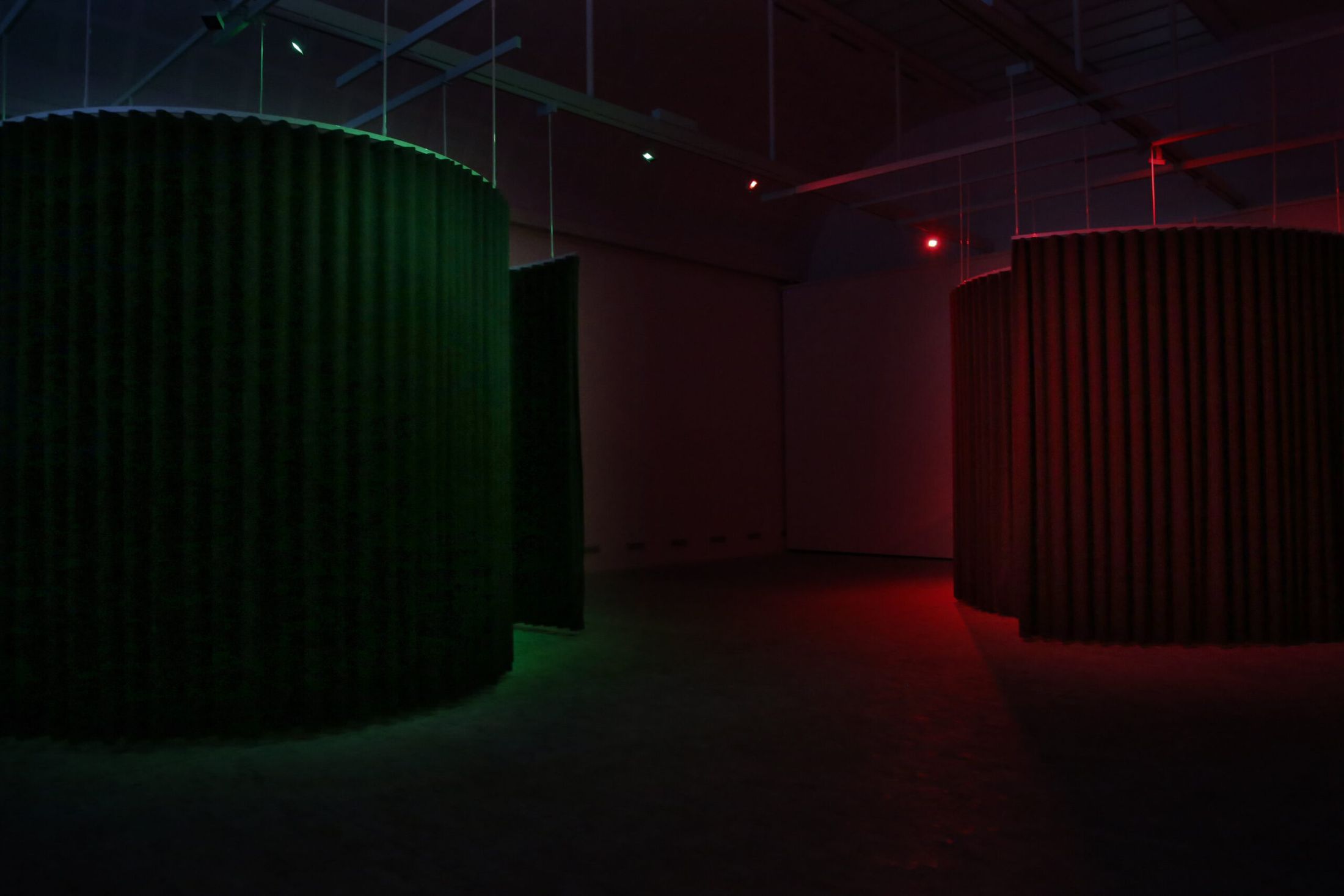
A solo exhibition by the sound artist Jacob Kirkegaard, who records the places we think of as silent: the ice cap in Greenland, the wall between Mexico and the United States, the wild boar fence on the Danish-German border, and the human body after death. Six sound installations were designed and built for the halls of Kunstmuseet i Tønder, each a room of its own. MELT, forty minutes of melting ice in a white double-walled chamber with twelve hidden speakers, red light and haze. Animal and Membrane, video and sound on the two fences. And Opus Mors in four parts, morgue, autopsy, decomposition and cremation, each given its own space: curtained cylinders in green and red, and a blue chamber with a pool of water under an opening in the ceiling. Nothing to look at but colour and light. Everything to hear.

ClientMuseum Sønderjylland, Kunstmuseet i Tønder
LocationKunstmuseet i Tønder
TypeSolo exhibition, January to September 2021
ArtistJacob Kirkegaard
Year2021
Our role

Design / technical production / installation

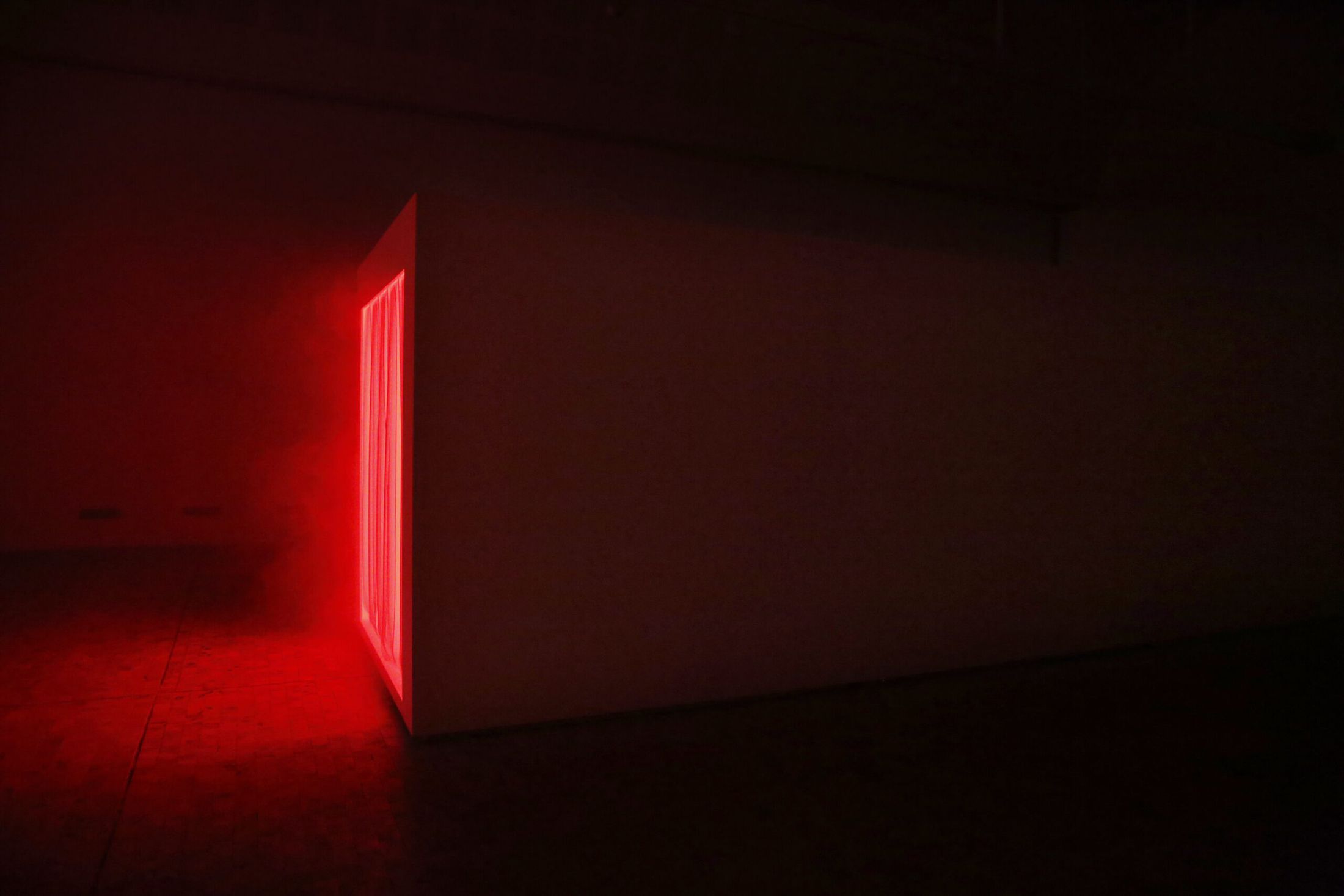
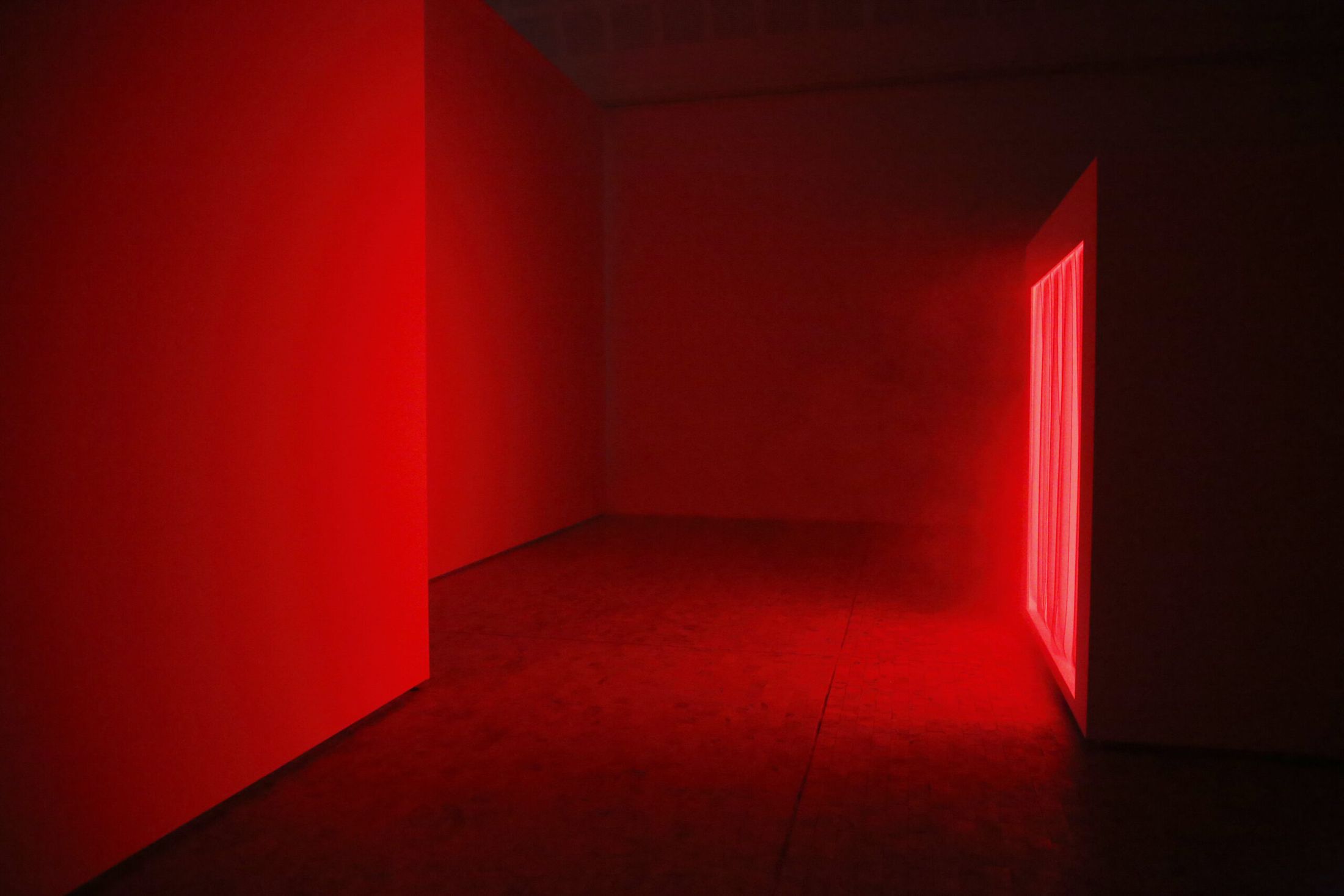
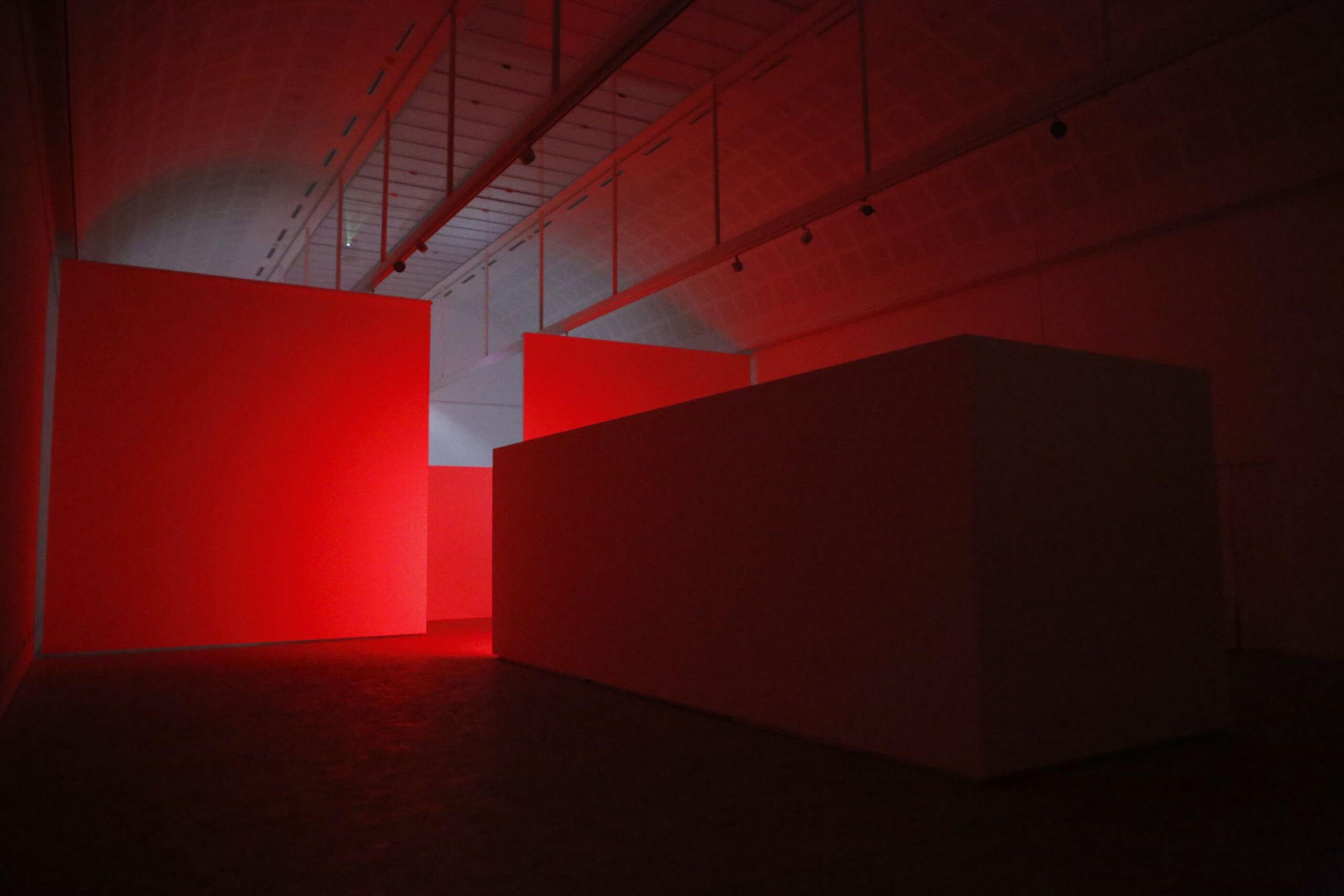
MELT

Jacob Kirkegaard, 2016. 40 minutes. Twelve speakers, red light and haze. A white double-walled chamber with the speakers hidden in the ceiling.

MELT is composed of recordings of different stages of ice melting, moving from the violent sounds of ice caps grinding against each other to trickling sequences and flows of water. It traces how water moves through its phases, from solid to liquid, changing the combination of molecules irrevocably. All sounds were recorded in Greenland by Kirkegaard in 2013 and 2015.

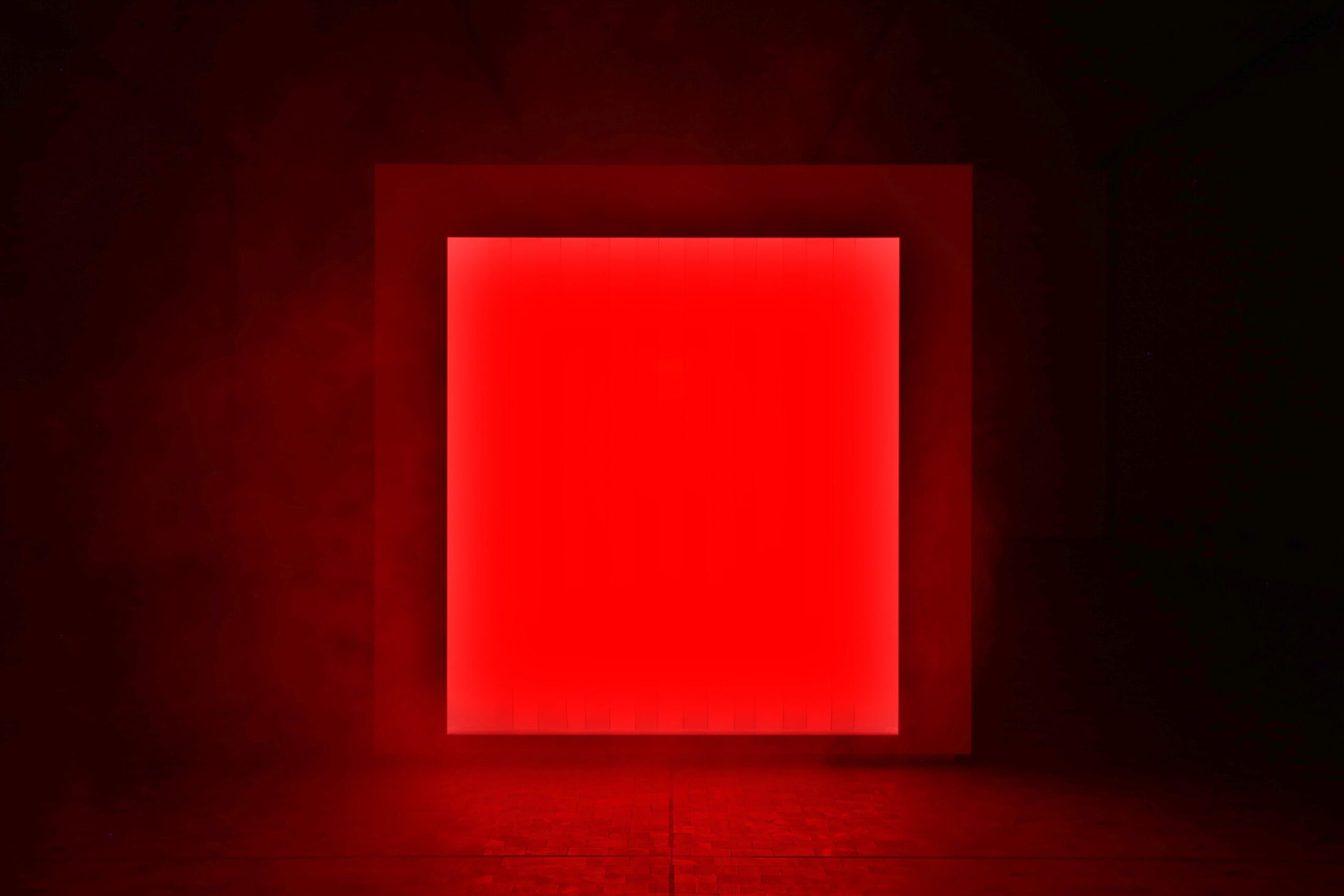
MELT, the red-lit square doorway seen straight on
MELT, the red-lit doorway into the white chamber
MELT, the red corridor between the double walls
MELT, the white chamber lit red under the museum's timber roof
MELT, red light on the wall in close-up

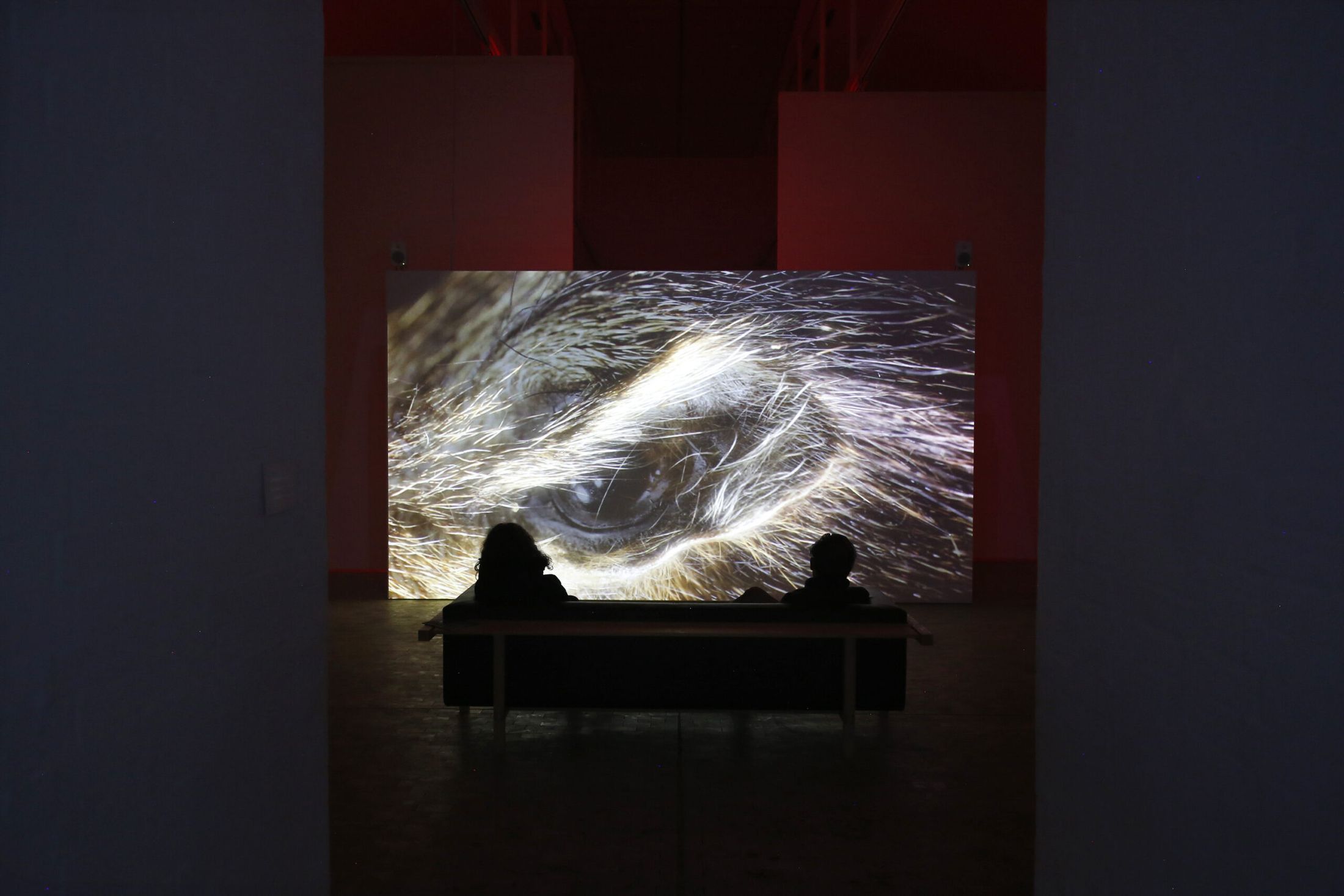
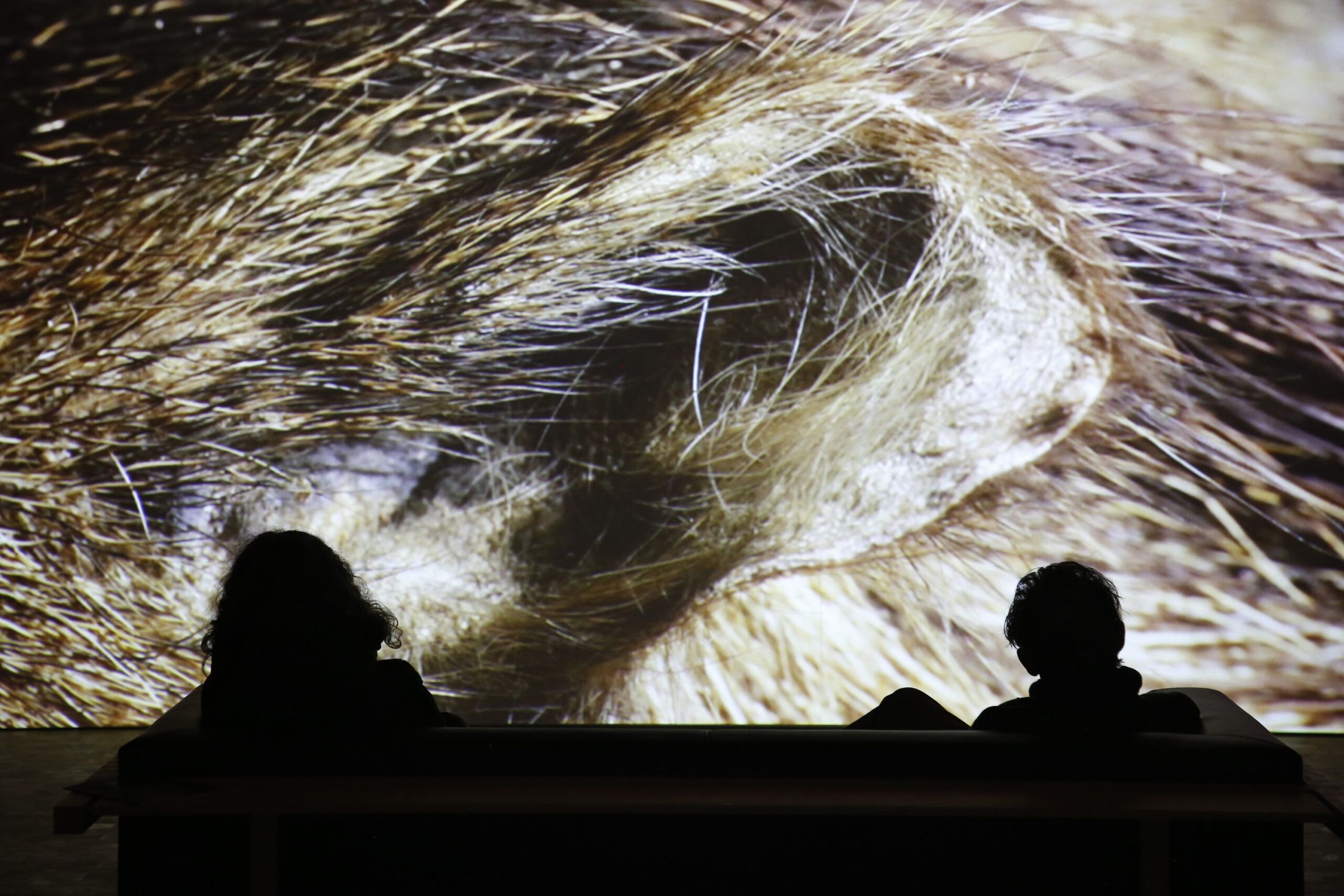
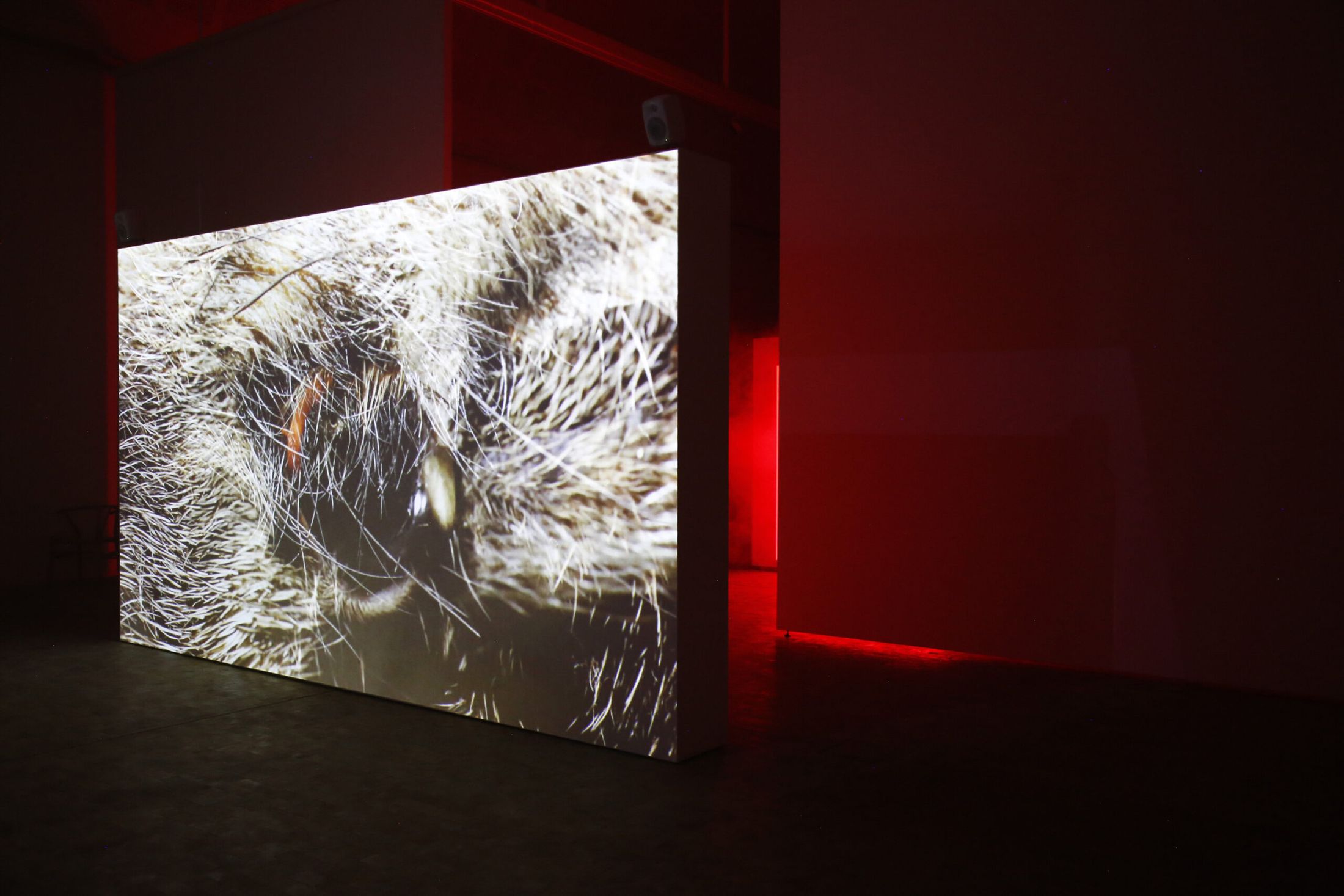
Animal

Dyret / Animal. Video work created for Kunstmuseet i Tønder, 2020. Thanks to the Natural History Museum, Aarhus.

Animal combines the sound of the so-called wild boar fence with video of stuffed wild boars. The recordings of the fence were made with vibration sensors placed on its surfaces in strong wind. The fence is a 70 km metal barrier erected by the Danish state in 2019 on the otherwise invisible border between Denmark and Germany.

Animal, the projection of wild boar fur seen from the entrance
Animal, visitors in silhouette in front of the fur projection
Animal, the screen beside a red-lit wall

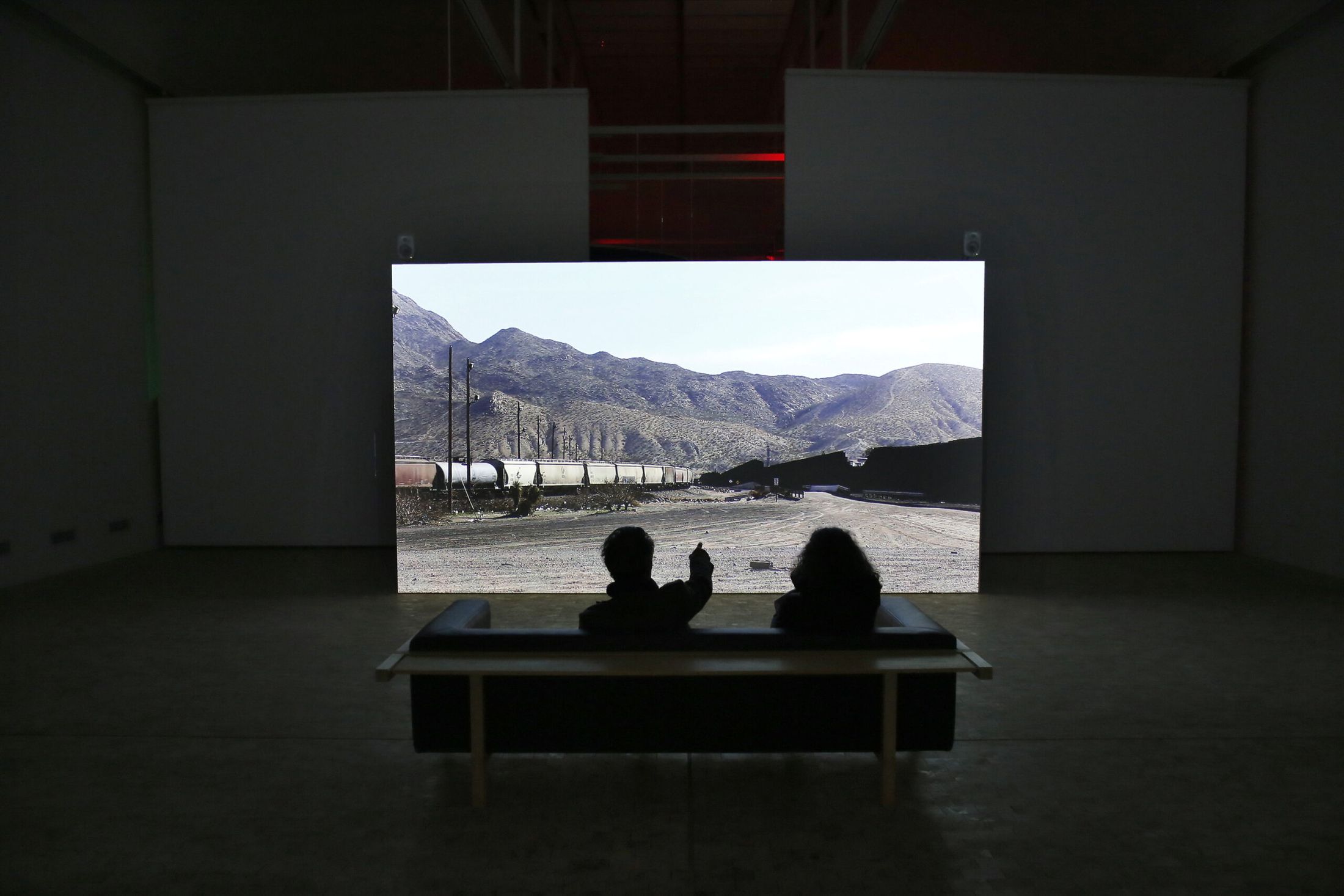
Membrane

Jacob Kirkegaard, 2020. 37 minutes.

Membrane is a sound and visual portrait of the growing border wall between Mexico and the United States. Kirkegaard travelled along the wall from El Paso to Tijuana, shooting video and recording the ambient sound of the landscape on both sides, as well as the inner sound of the metal itself, captured with vibration sensors attached directly to the wall. With its panoramic vistas and close views, Membrane reveals that this seemingly silent stretch of the American Southwest is alive with light, shadow and above all sound: the sound of the wall.

Membrane, two visitors on a bench in front of the video of the border wall

Opus Mors

A sound work in four parts on the environments of the immediate post-mortem.

Four listening spaces for one of the natural aspects of being alive, which is death. The work portrays four sound environments the human body will commonly be exposed to after death, events no one gets to sense on their own body: a morgue, an autopsy, a cremation and the decomposition. An immersive, intimate and detailed sonic meditation into the four spaces of death.

Opus Autopsia: near-field recordings of a full autopsy, from opening the body to closing and washing it, each organ with its own sonic timbre. Opus Putesco: recordings from a forensic facility where donated bodies decompose in an enclosed area of nature, made with measurement microphones one centimetre above and vibration sensors inside. Opus Morturarium: ambient recordings from two morgues, the deep tones of the machinery that keeps the bodies cold. Opus Crematio: the coffin rolled into the oven, the stages of the burning, the ashes cooled, crushed and poured into the urn.
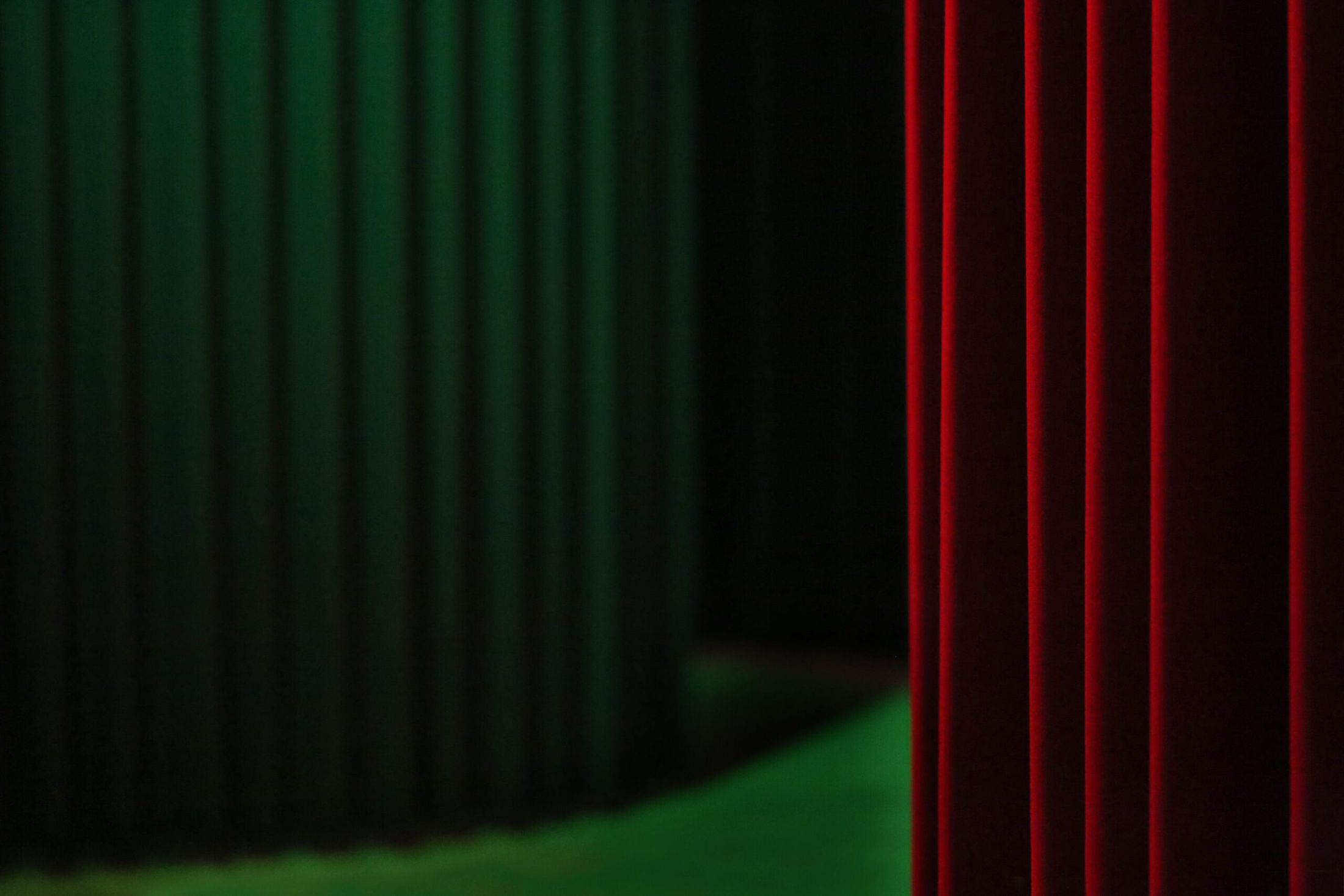
Opus Putesco and Opus Autopsia, the green and red curtained cylinders
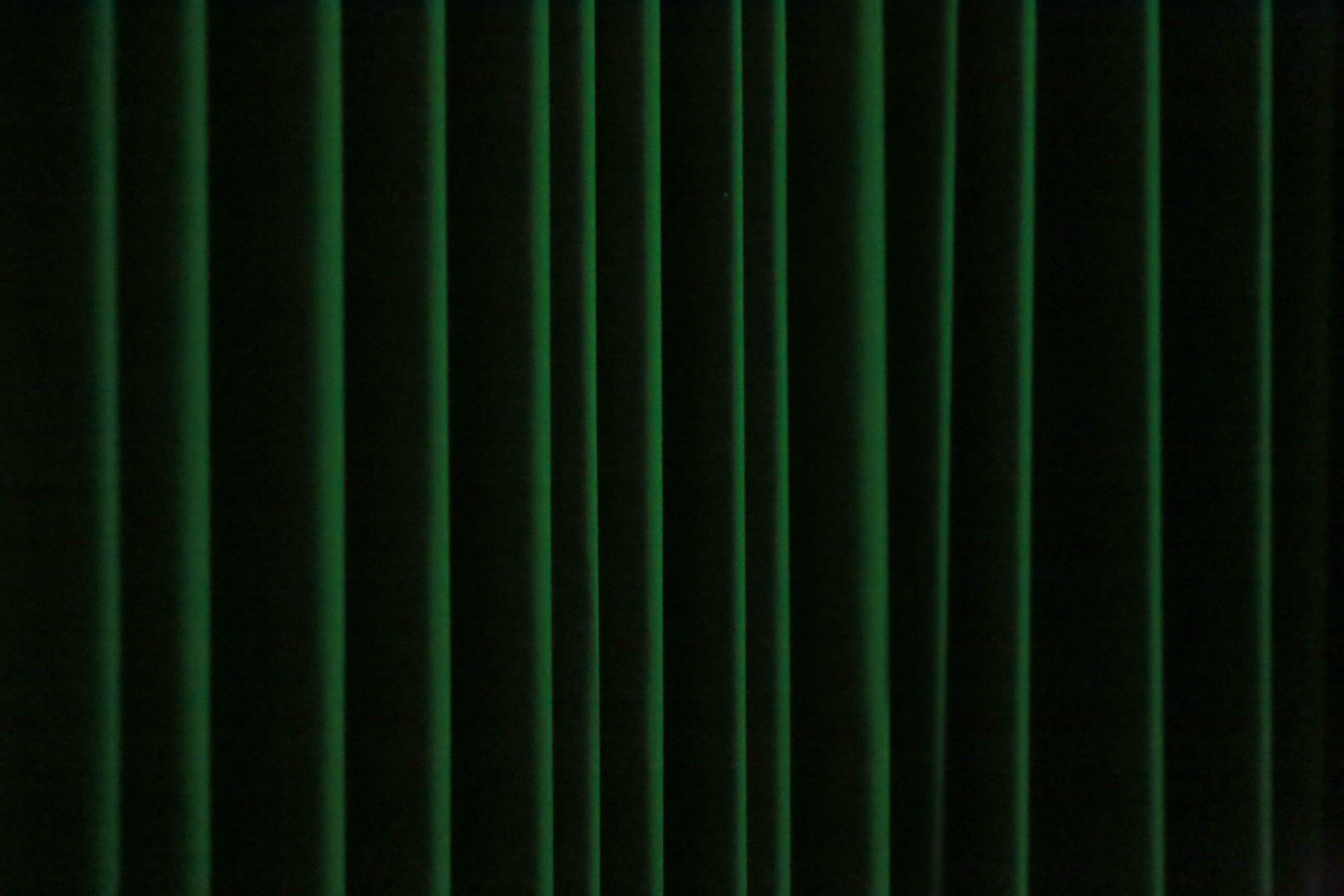
Opus Putesco, the green curtain in close-up
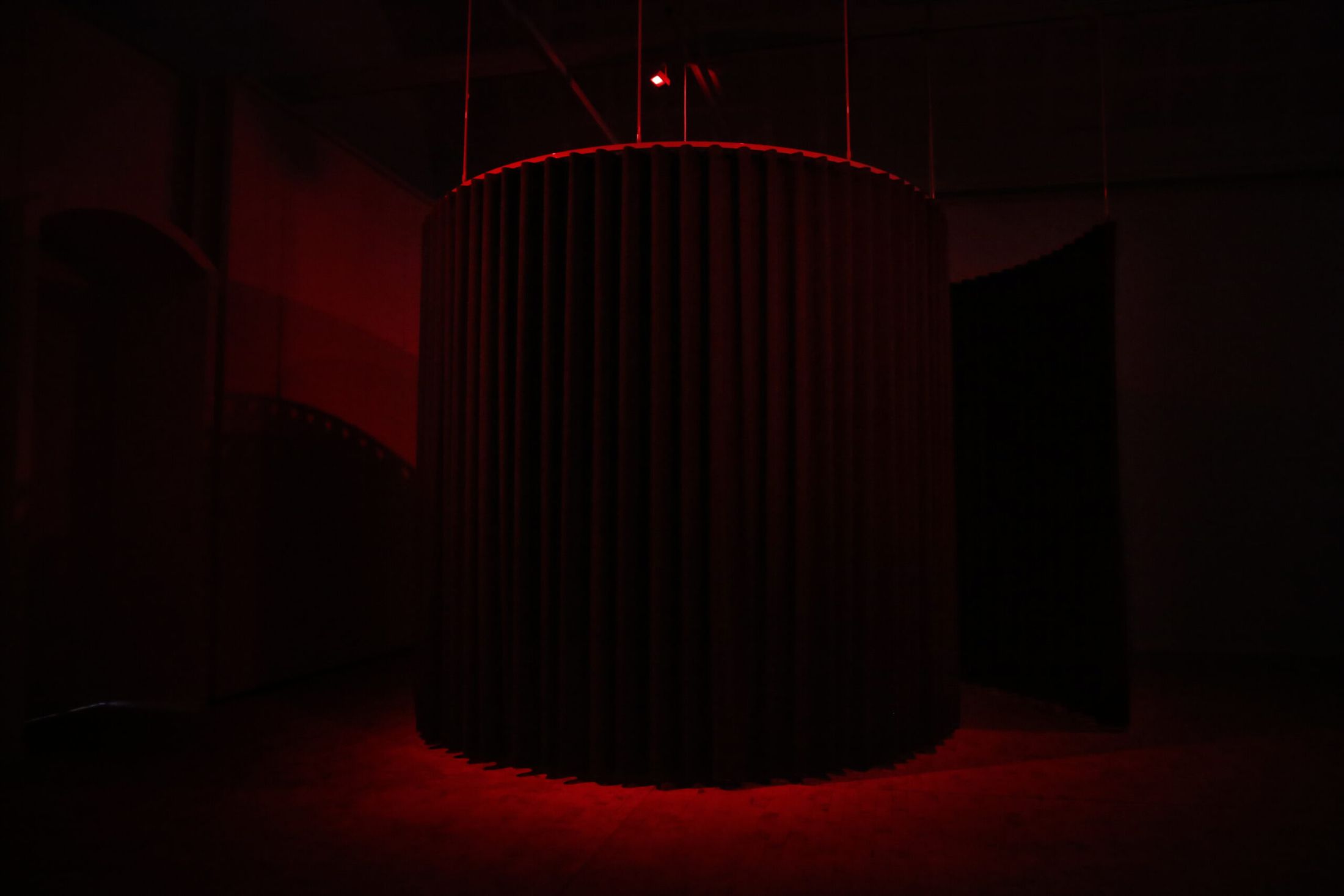
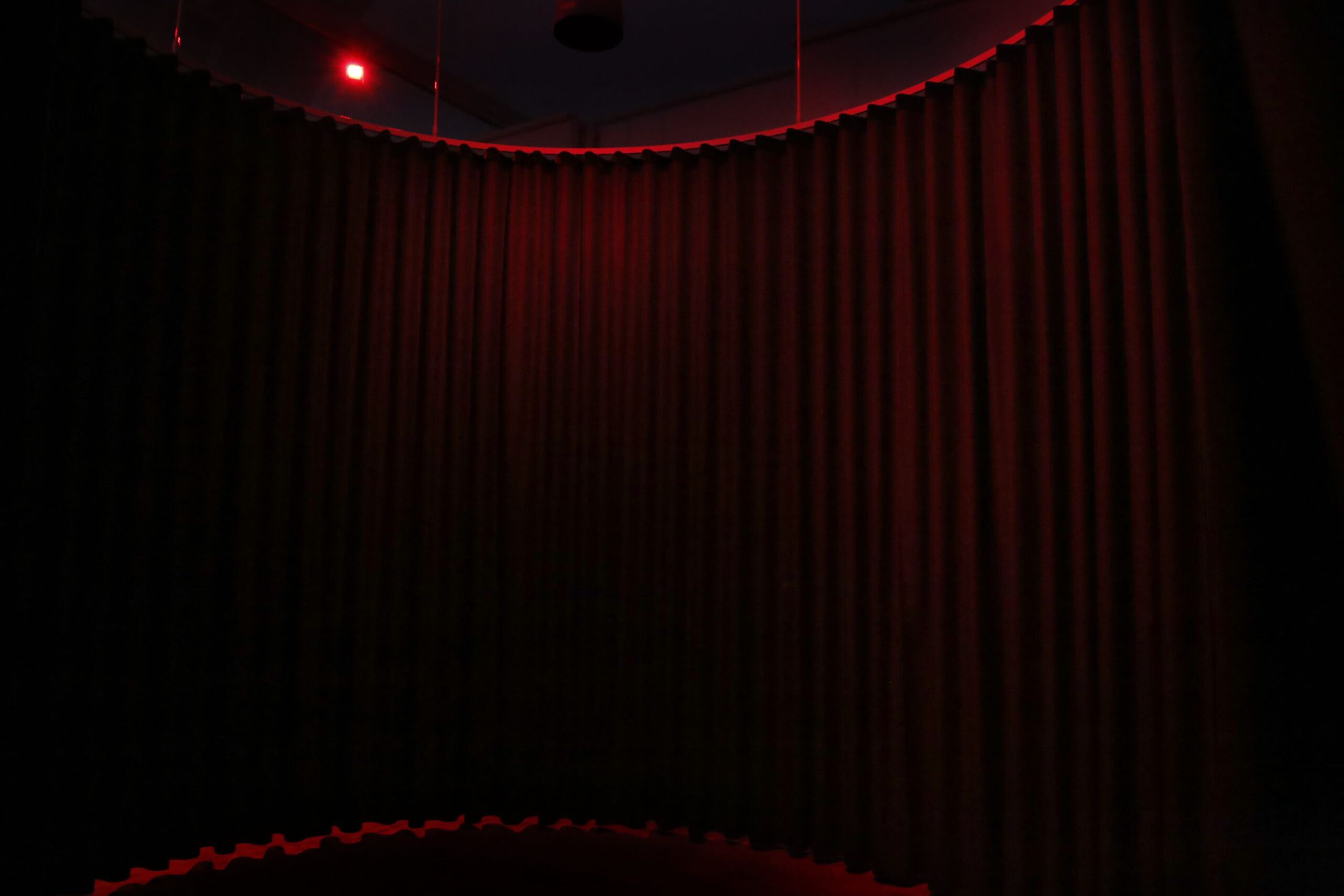
Opus Autopsia, the red curtained cylinder with a single speaker above
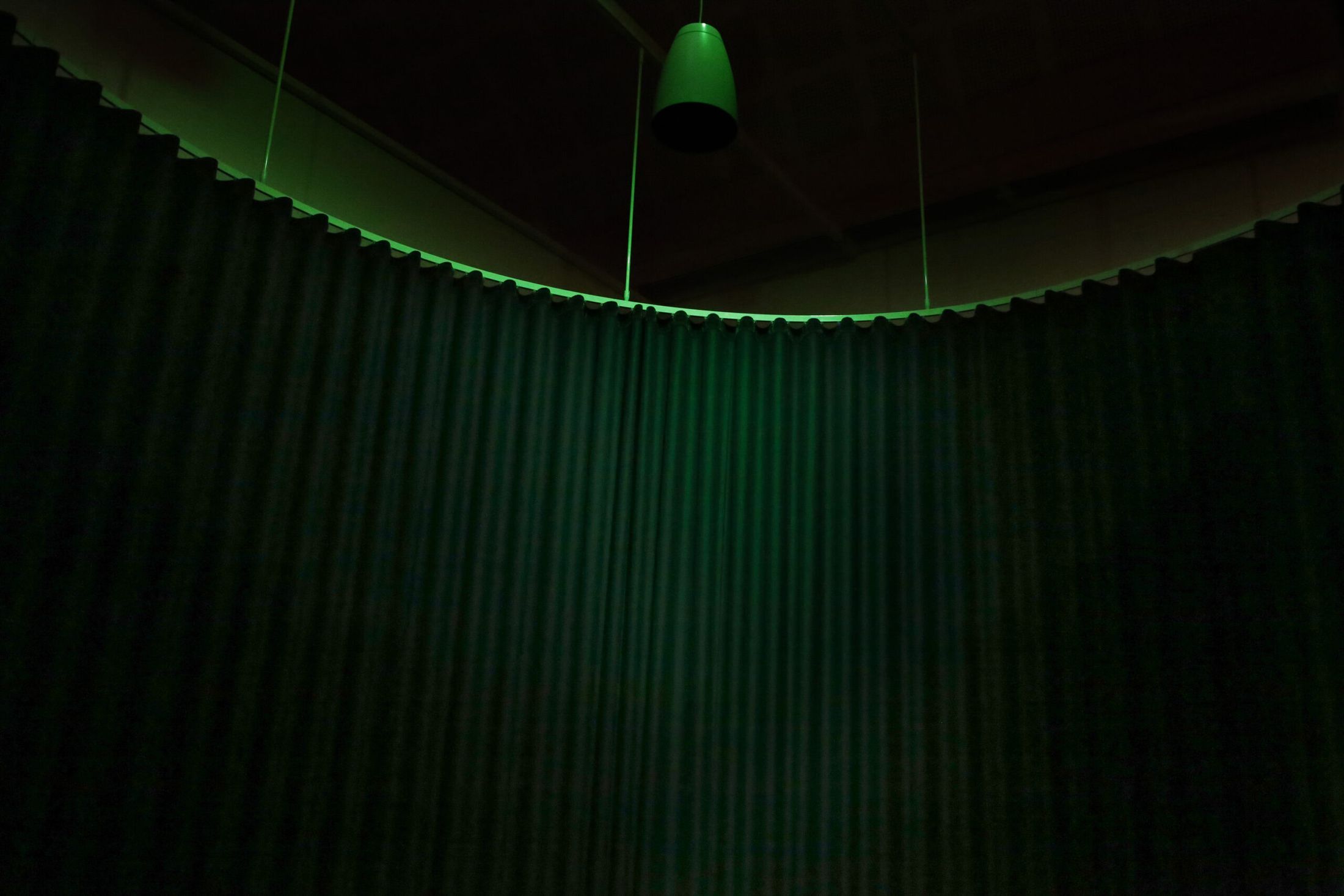
Opus Putesco, the green curtain from inside with the speaker
Opus Putesco and Opus Autopsia, green and red pleats side by side
Opus Autopsia, inside the red cylinder
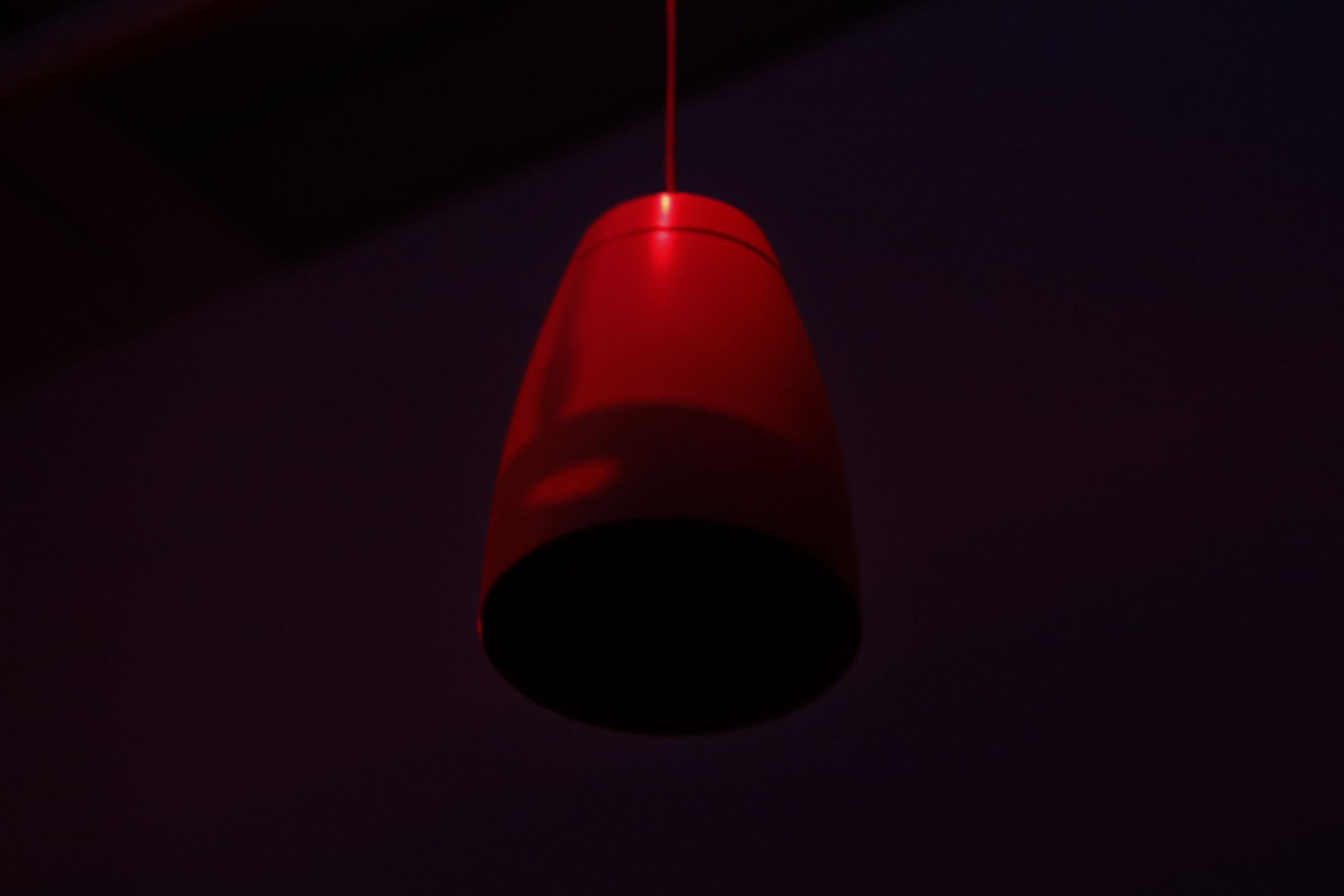
Opus Autopsia, the speaker hanging in red light
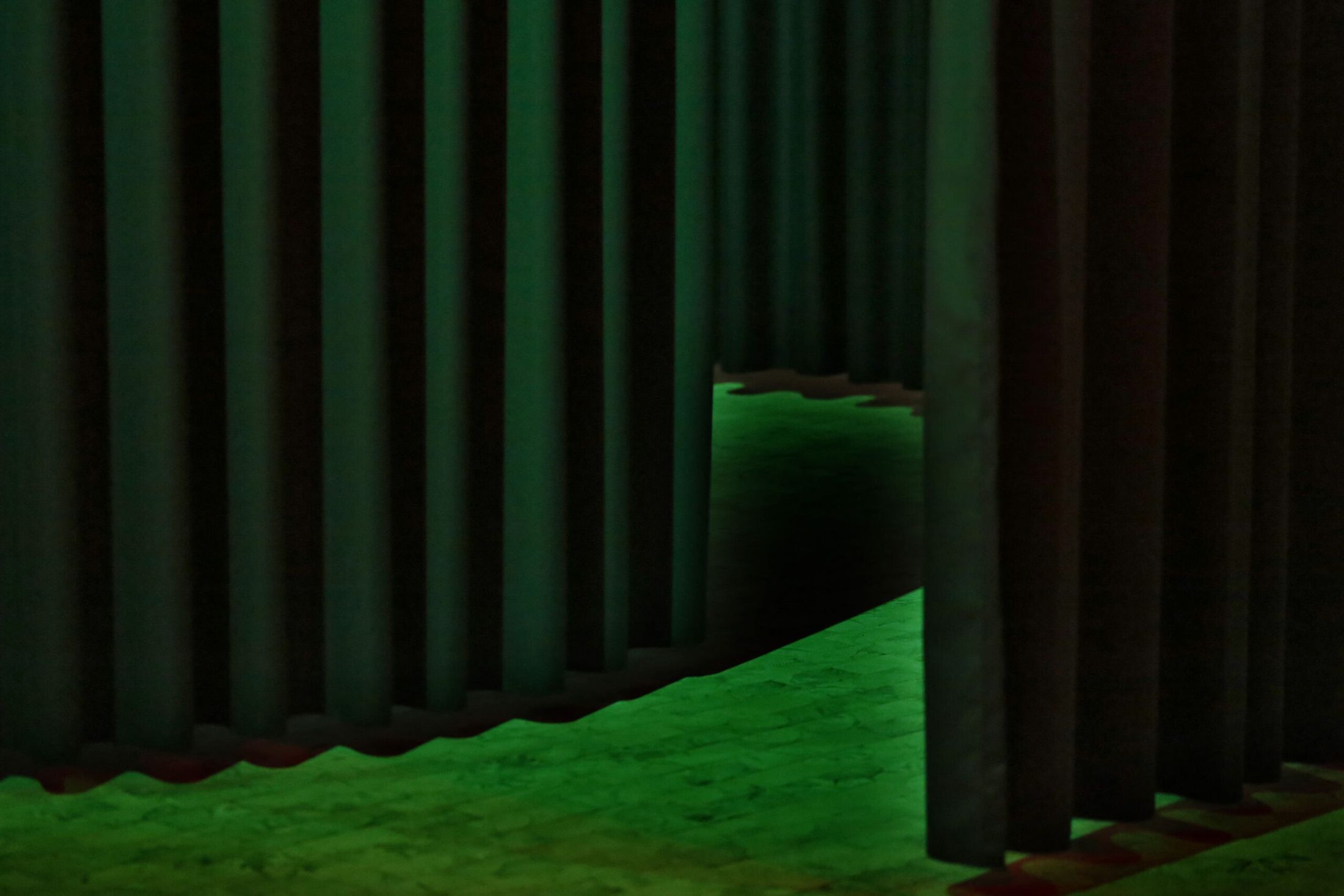
Opus Putesco, the green columns of the curtain
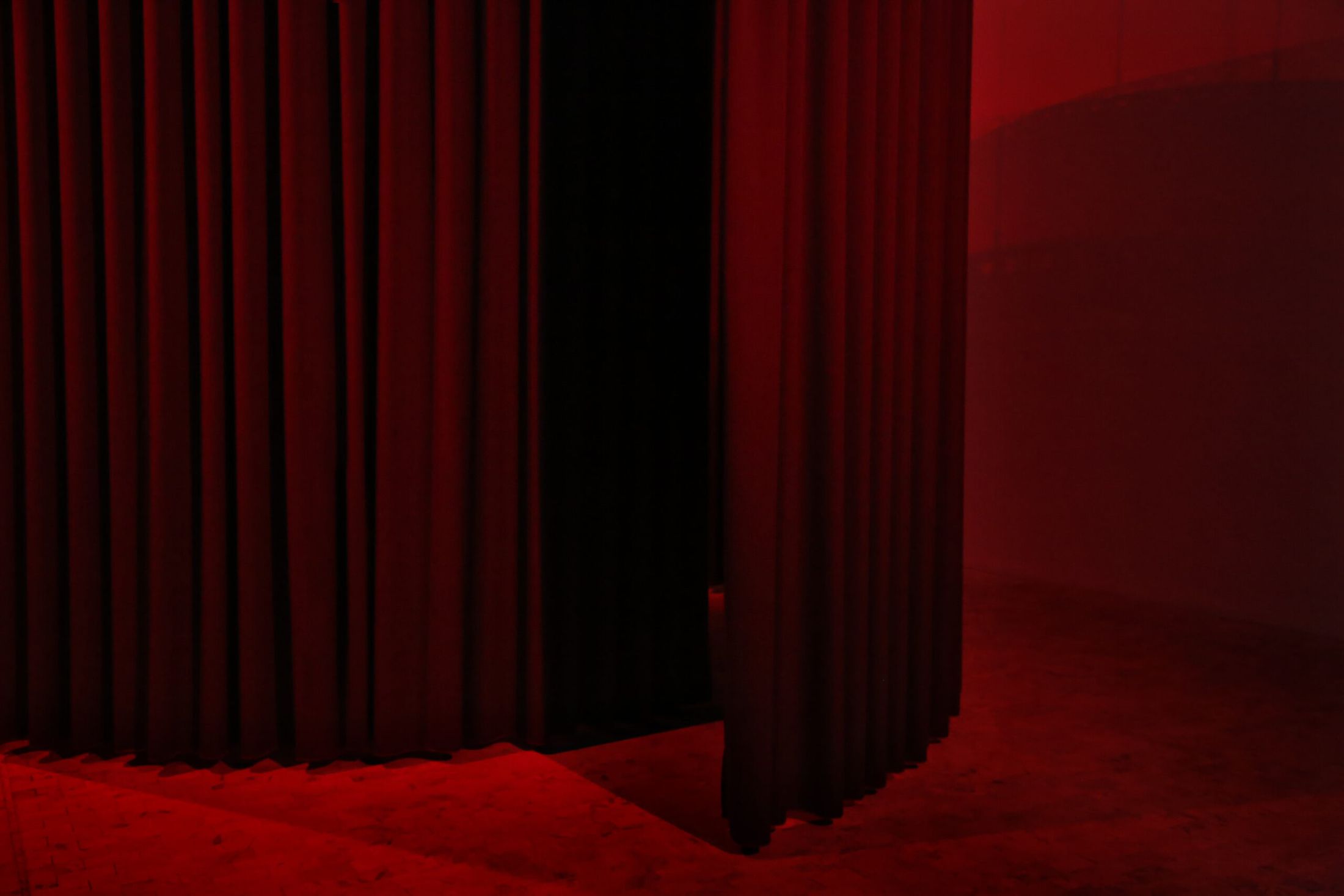
Opus Autopsia, the opening in the red curtain

Opus Morturarium

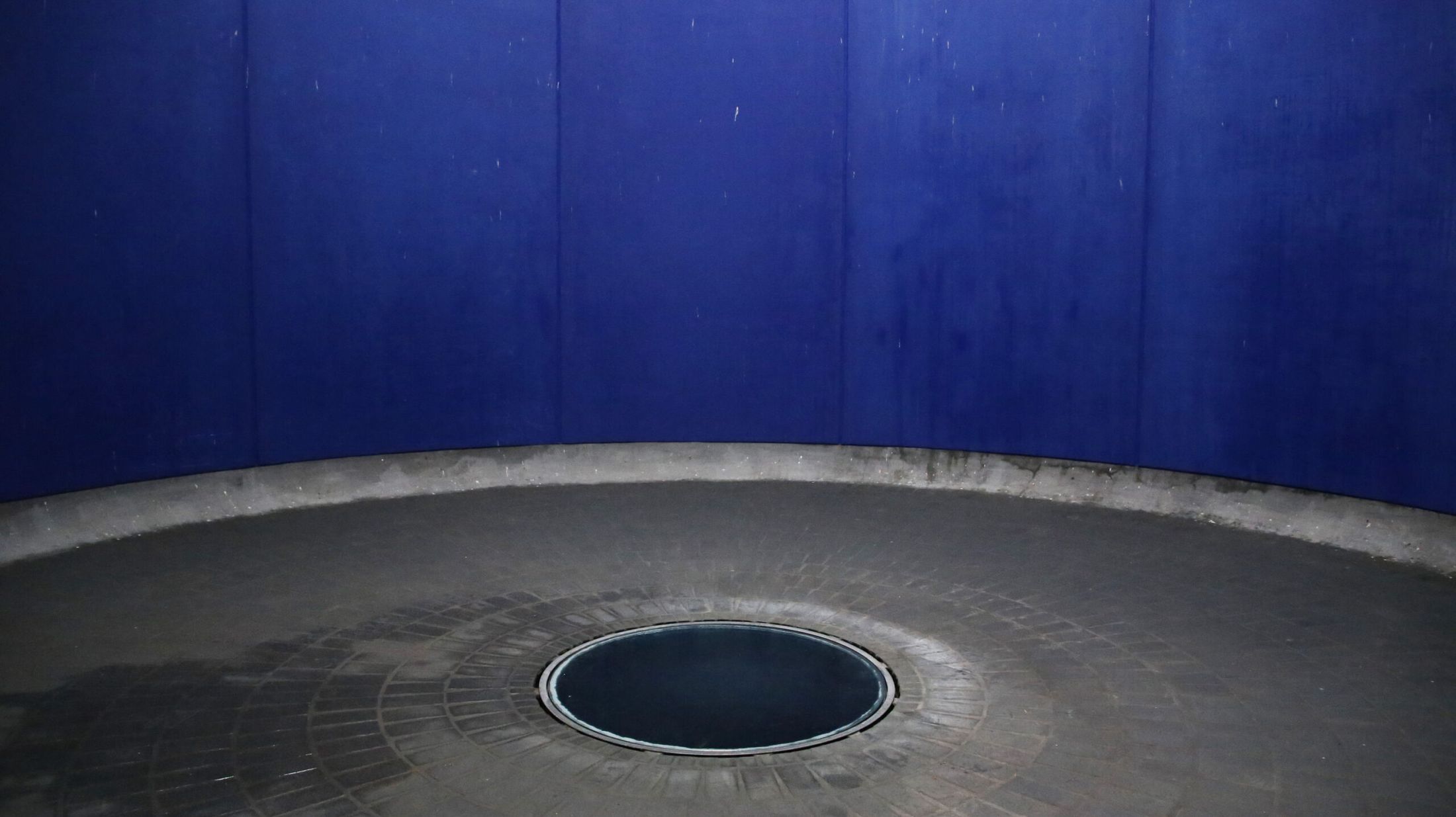
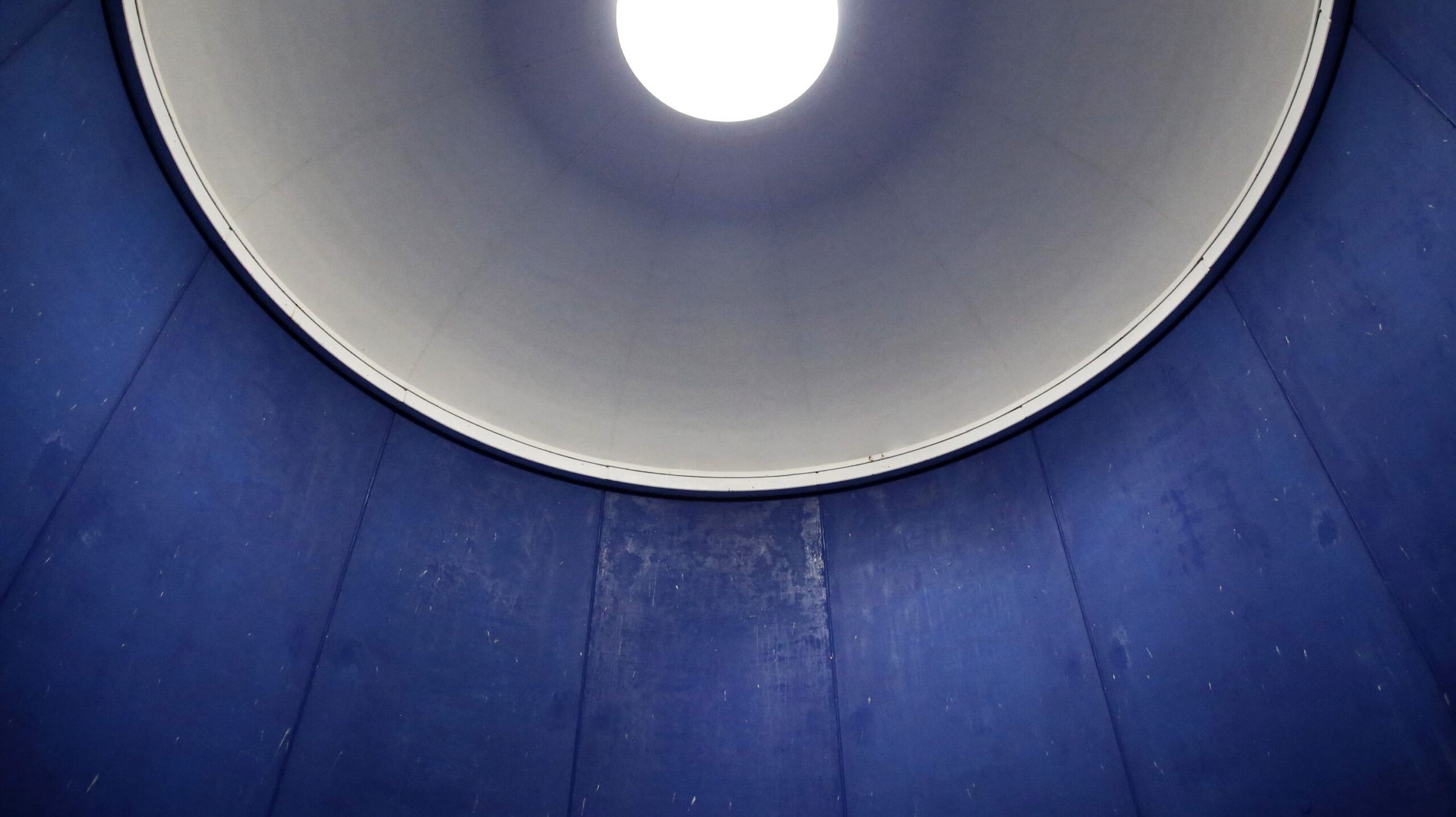
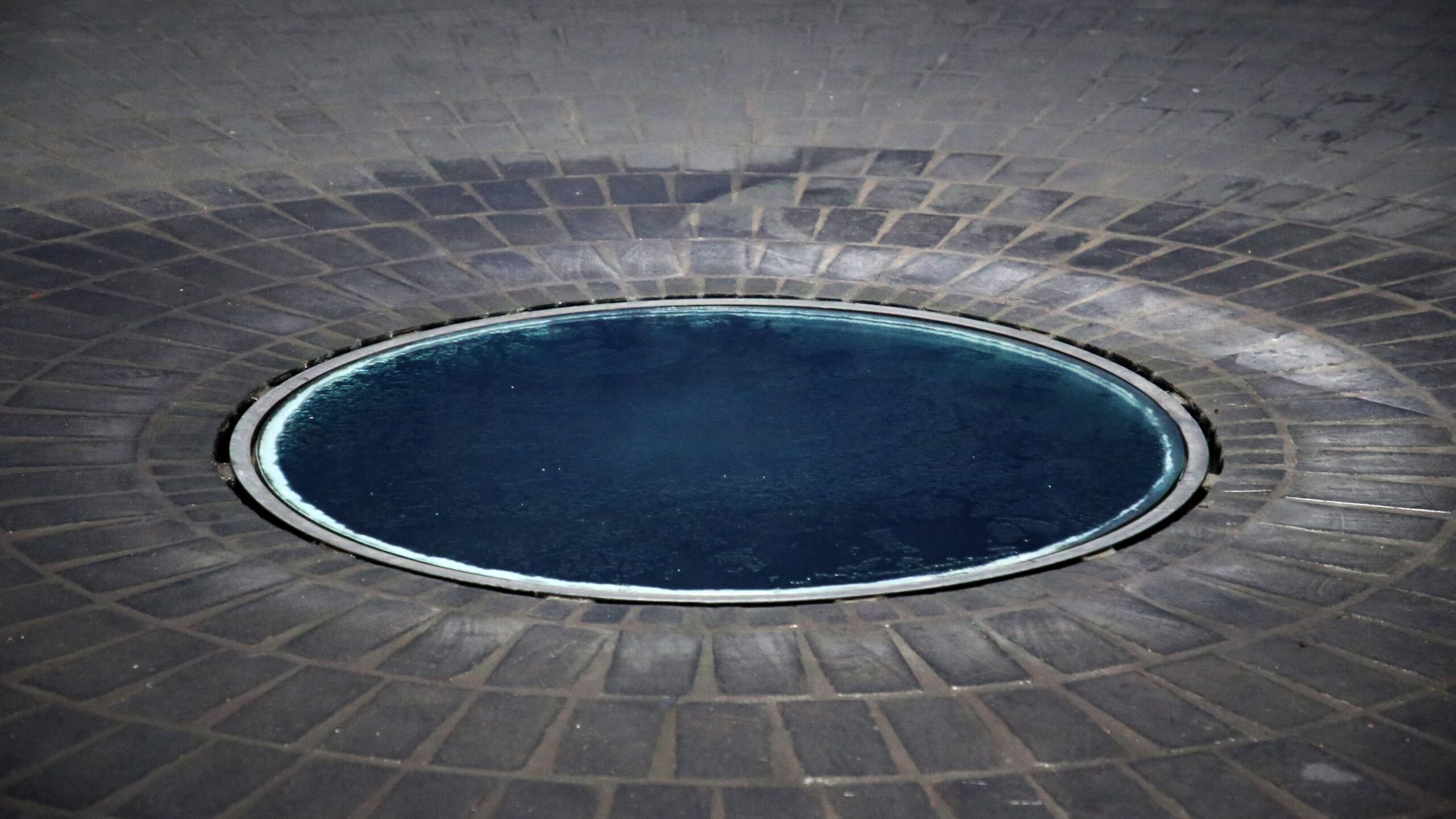
The blue chamber. A circular room with a pool of water in the floor under an opening in the ceiling, and the deep tones of two morgues in the walls.

Opus Morturarium, inside the blue chamber with the pool in the floor
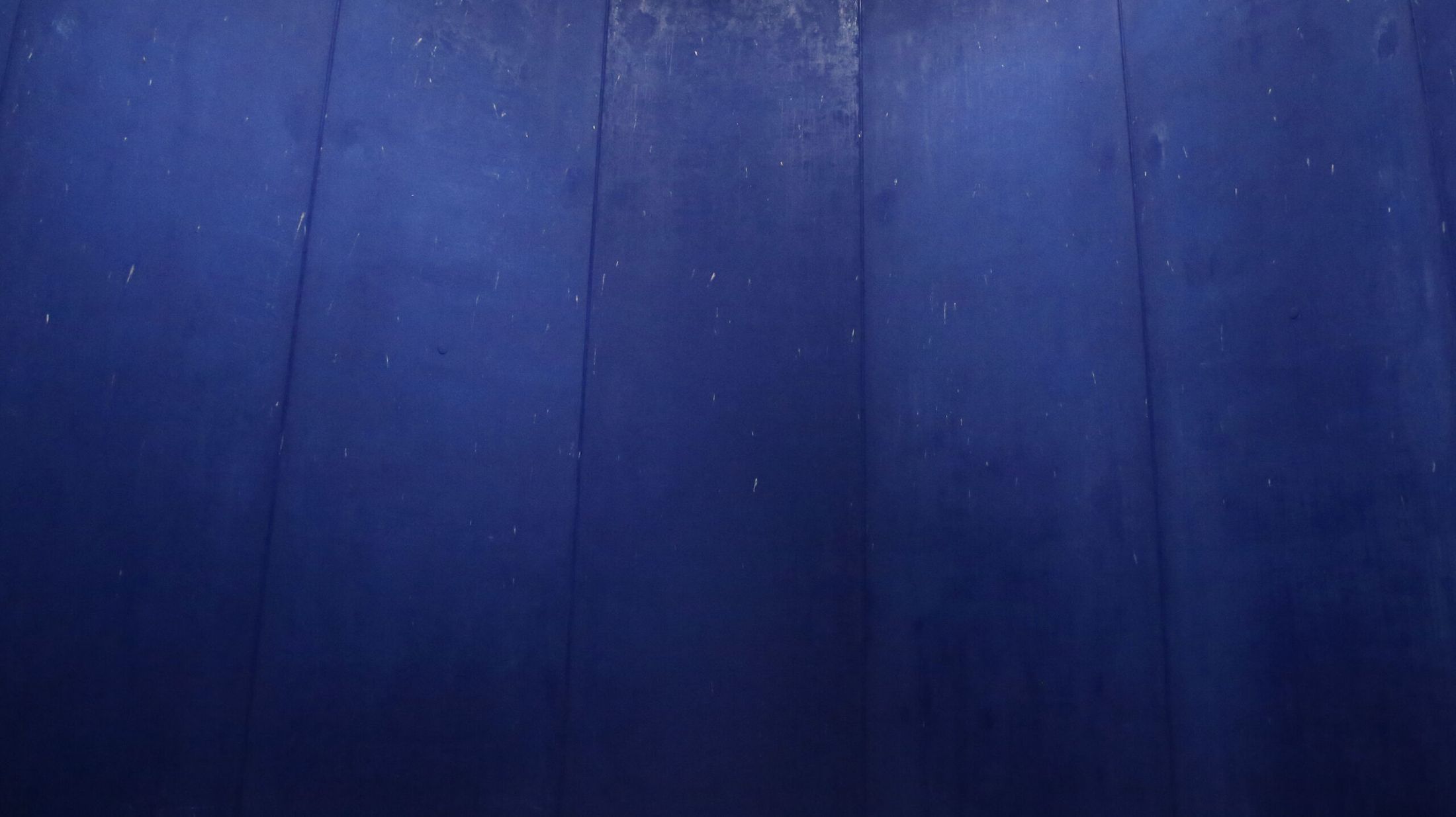
Opus Morturarium, the blue wall panels
Opus Morturarium, the opening in the ceiling
Opus Morturarium, the round pool of water in the stone floor

PhotoJacob Kirkegaard

← Back to all work